Discovery should be predictable.
Not accidental.

Continent-scale prospectivity, built from the geology up — mineral-systems thinking fused with geologist-guided AI.
Trusted by major miners.

Coverage
5M+ km²
Mapped across three continents
Precision
97–99%
Search space reduced
Validation
80–95%
Blind-test deposit accuracy
Trusted By
Major miners
BHP · Endeavour Mining

Projects & case studies.

From continent-scale prospectivity for BHP, to asset-scale targeting for Endeavour, to standalone data products for juniors — a selection of our active and recent engagements.
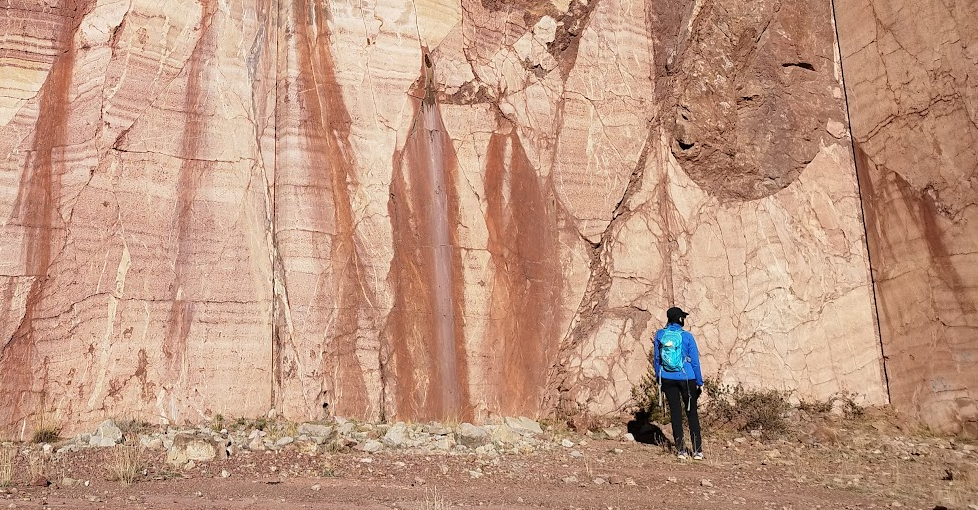
BHP Southern Africa sedimentary copper prospectivity map — AI-driven mineral systems analysis highlighting Tier-1 SedCu targets
Case Study

BHP — 85% of deposits in top 1% most-prospective ground (Africa, multiple countries)

Continent-scale sedimentary copper prospectivity for BHP across the Central African Copperbelt, delivered during the BHP Xplor 2024 accelerator. The mineral-systems model alone placed 85% of major deposits within the top 1% most-prospective ground — and ML improved the result further. Untested targets remain both above and below cover. Equivest continues to work with BHP on prospectivity studies in other regions.
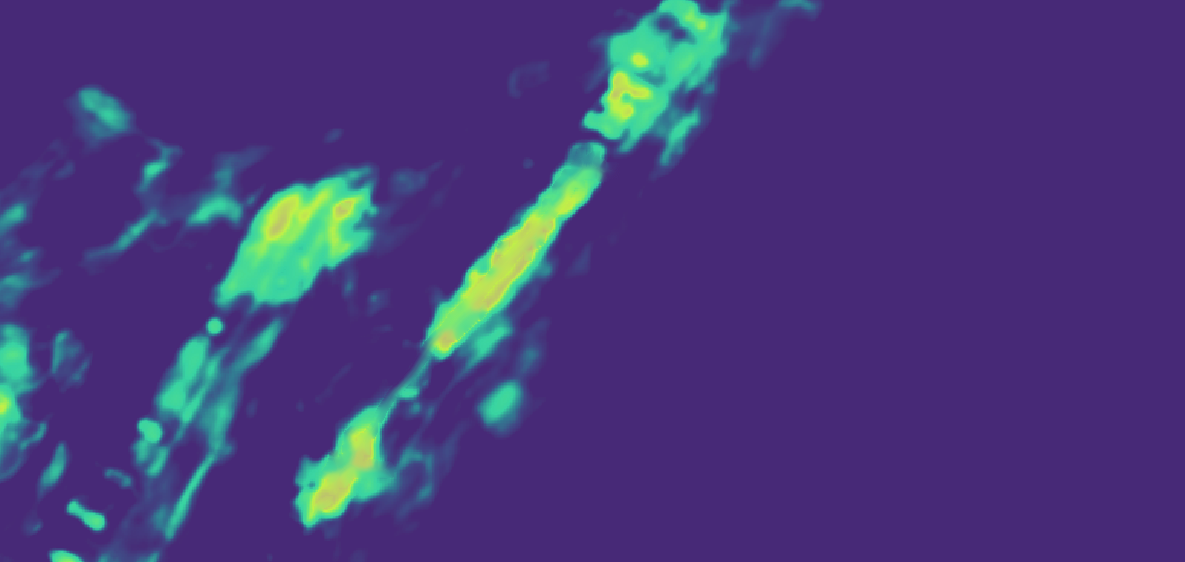
Endeavour Mining Senegal Mako Belt prospectivity heatmap — Samina–Delaya trend recovered as a NE–SW prospective corridor
Case Study

Endeavour Mining — 7 of 8 blind-test deposits correctly predicted (Senegal)

For Endeavour Mining, Equivest delivered regional prospectivity across 4,000 km² of Senegal's multi-Moz Mako Belt. Trained on Endeavour's drilling data and grounded in an orogenic-gold mineral systems framework, the model was blind-tested against 8 known deposits held back from training — and correctly predicted 7 of them. Search space was significantly reduced to <3%.
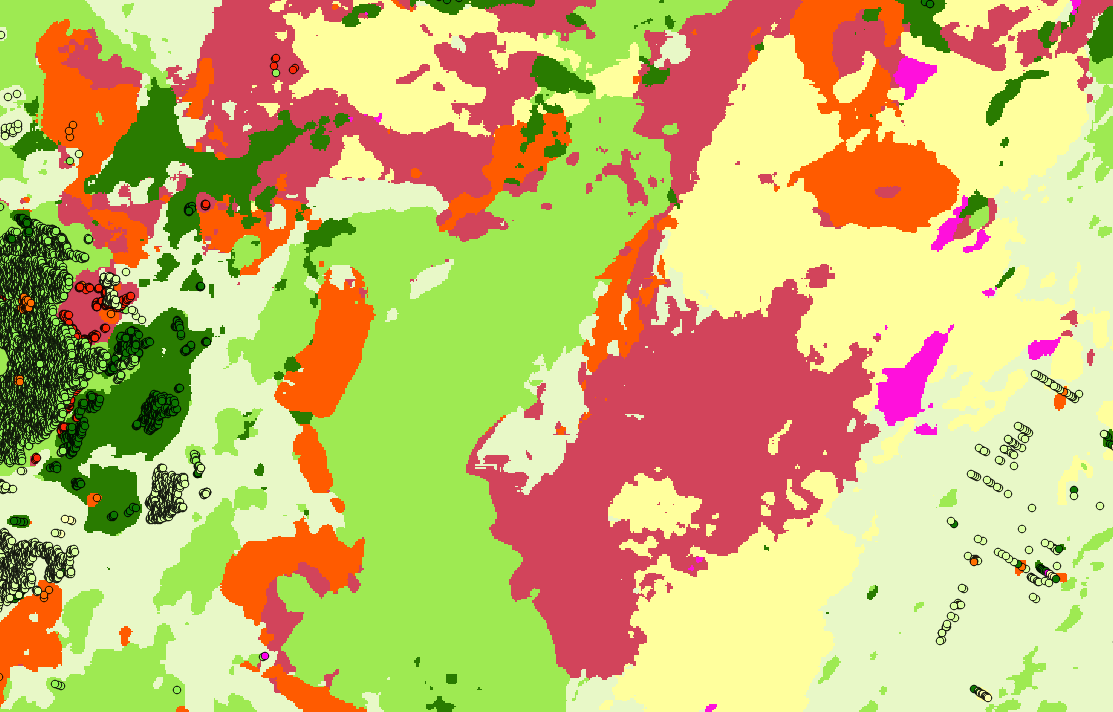
Endeavour Mining Senegal Kédougou-Kéniéba Inlier — predictive bedrock classification map showing lithological units in low-contrast magmatic-volcaniclastic basement
Case Study

Endeavour Mining — Field-validated bedrock in low-contrast basement (Senegal)

For Endeavour Mining, Equivest mapped bedrock across Senegal's Kédougou-Kéniéba Inlier — a magmatic-volcaniclastic basement terrane where conventional bedrock classification fails because lithological contrasts in magnetic and radiometric data are weak. We used a vision transformer to pull subtle textural patterns out of magnetic data that classic geophysical derivatives miss, then combined neural-network image segmentation with machine-learning classifiers trained on outcrop and drillhole data. The result: predictive, field-validated bedrock maps — an objective second opinion alongside the geologists' interpretation.
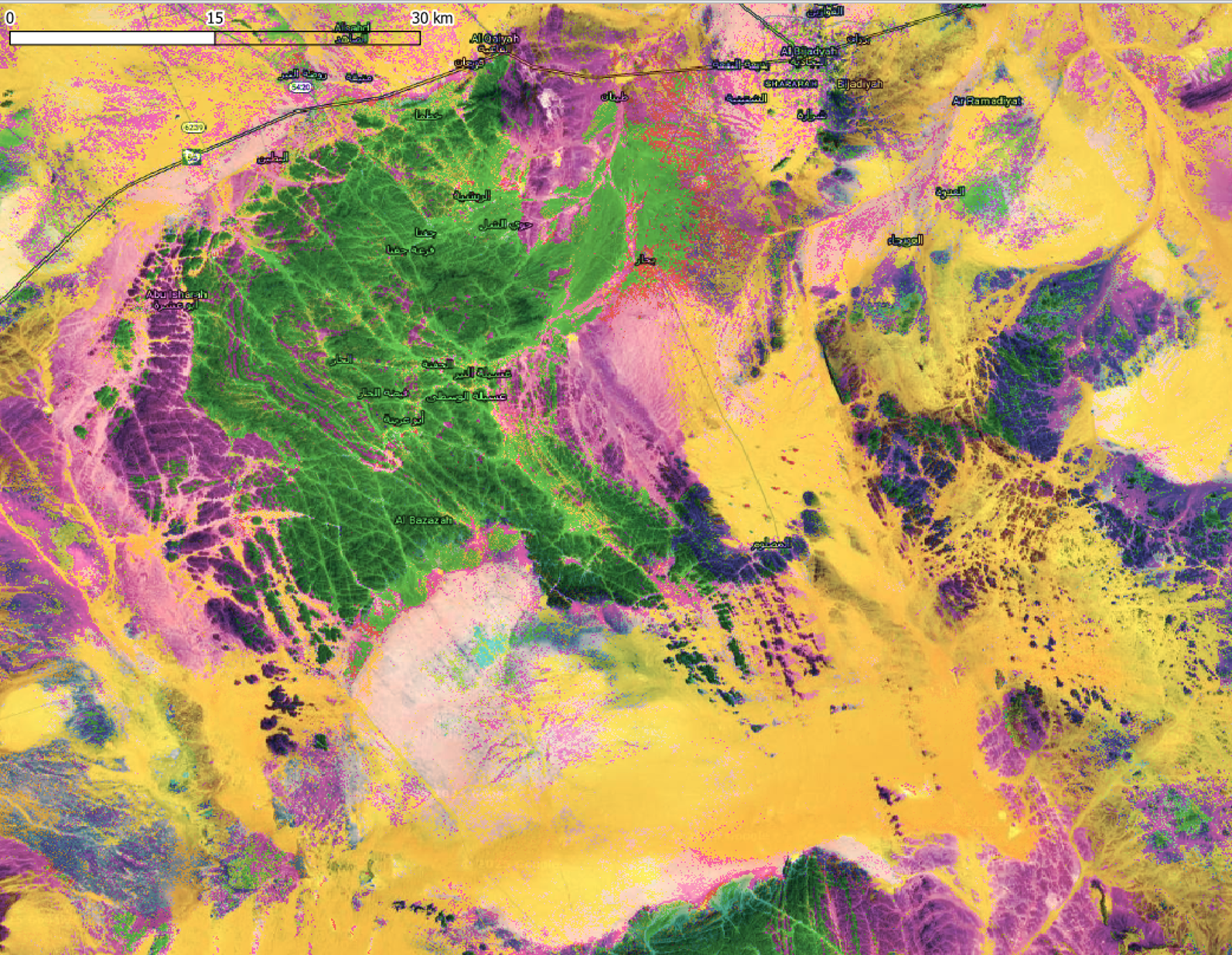
EMIT hyperspectral mineral map of the Kingdom of Saudi Arabia — alteration zonation across the Arabian Shield
Data Product

DesertEx — ~600 km² acreage on Equivest-identified targets (Saudi Arabia)

For DesertEx — the first junior to deploy Equivest's EMIT hyperspectral data at significant scale (+1 million km²) — the dataset prioritised alteration targets across the Kingdom of Saudi Arabia. Field checks of the highest-ranked targets returned outcropping copper mineralisation or large alteration systems over an untested porphyry systems; DesertEx applied for ~600 km² of ground over the validated areas.

Geology first. AI second. Both at scale.

Most exploration works backwards — forcing a mineral occurrence into a discovery, and accepting a 1-in-1,000 success rate. We start with the geological processes that form giants, and built the AI to match.

MINERAL SYSTEMS

Start with Tier 1 geology

Mineral-systems thinking maps the processes that form giant deposits — the discipline that lets oil & gas hit commercial discoveries 1-in-3 times, vs mining's 1-in-1,000. We apply it at both continent or project scale.

SIGNAL FUSION

Signal, not noise

The signal isn't in the geology or the data alone — it's in the combination. Geologists and data scientists co-engineer feature layers that encode the mineral system, and ML is trained on that fusion rather than on raw measurements. We're now extending the stack with AI agents that tighten the loop further and accelerate the timeline.

AUDIT-READY

Rigour, not rhetoric

We build mineral-systems models, not magic. Every target carries traceable evidence, every feature layer has a geological rationale, every model flags its uncertainty. Audit-ready by default - the way geologists expect it.


Equivest was built on a single belief: that discovery should be repeatable.

Equivest Metals is the only AI mineral-exploration company built on its founders' own discovery profits. Before Equivest, Joanna Ponicka (CEO) made the Dugong oil discovery near Snorre in 2020, applying petroleum-systems thinking to a prospect she had developed. Erlend Rongen (CTO), a data scientist, spent seven years at Norway's largest bank turning transaction data into +$8M/yr of revenue and a 25% conversion-rate ML model that replaced a 3% legacy one.

Before founding Equivest, Joanna and Erlend applied mineral-systems thinking to early-stage explorers and identified — pre-discovery — WA1 Metals' Luni niobium discovery in West Arunta, Poços de Caldas rare earths in Brazil, and two Tier 2 uranium discoveries in Canada. Same framework, different commodity: picking where giants form, not where geologists have already looked. Those returns funded Equivest.

Equivest was built on a single belief: that discovery should be repeatable. Today the team has grown to include Senior Geologists and Data Scientists running continent-scale data pipelines, mineral-systems feature engineering, and ML prospectivity — delivered as drill-ready prospects. We were one of six companies selected from 600+ applicants for the BHP Xplor 2024 accelerator, which was critical in shaping our business. Our work is currently informing exploration decisions on multiple continents.

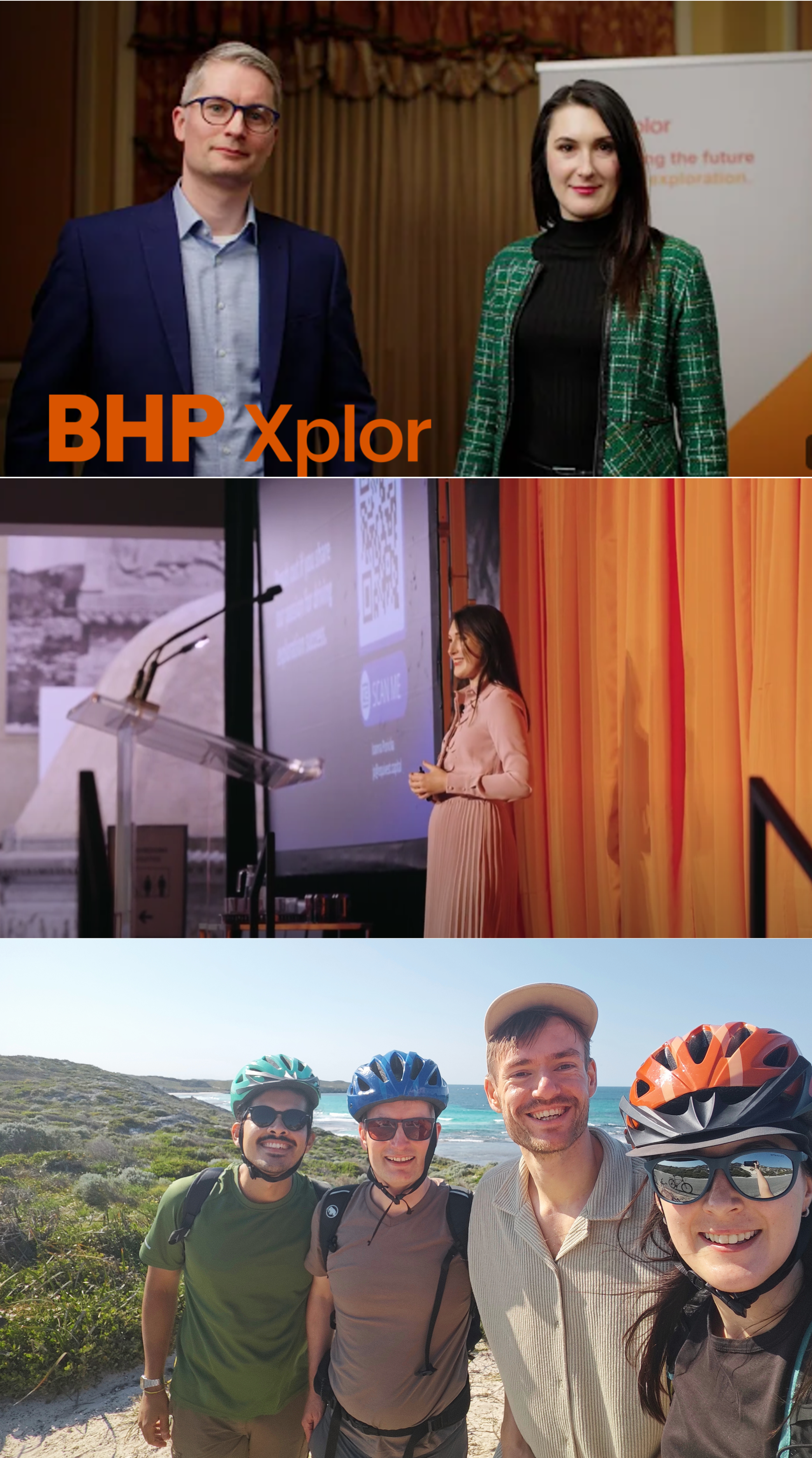
Equivest Metals founders Joanna Ponicka (CEO) and Erlend Rongen (CTO) at the BHP Xplor 2024 showcase, Toronto

How we work.

A four-phase workflow that translates raw geoscientific data into ranked exploration prospects — each phase guided by the mineral system framework.

1

Data compilation

Your data and every public dataset, fused into one AI-ready cube at 10–500 m resolution. Geophysics, drilling, geochemistry, remote sensing — searchable, queryable, ready to model.

2

Mineral system analysis

We go deep — studying local geology and global analogues to unravel the processes that form major deposits: source, migration, trap, precipitation, preservation. Each element is translated into series of mappable proxies.

3

Feature engineering

Most AI exploration models learn from raw data — and raw data is ambiguous. A magnetic anomaly could be a metal source, a fluid conduit, or noise. Our feature layers resolve that ambiguity: each one encodes a specific mineral-system hypothesis as a quantitative, mappable proxy. The AI learns from geological meaning, not just raw measurements.

4

Prospectivity mapping

Mineral-system-driven models, AI models, or a combination — configured to the project. A mineral-system model alone predicted 100% of 5+ MOz deposits in one regional study; an AI model blind-tested against 8 known deposits correctly predicted 7 and reduced search space to <3%.


Start with an Exploration Scoping Session.

Forty minutes. You share your project; we bring the framework. By the end, you'll know exactly how we'd approach it — and whether we can unlock your next discovery. Book a session below.

info@equivestmetals.com Email us anytime
+47 412 22 466 Mon–Fri · CET

Messages go to info@equivestmetals.com  ·  By submitting you agree to our Privacy Policy